

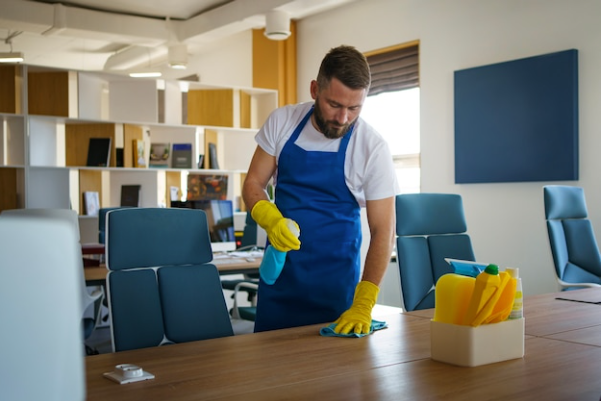
A clean office creates a more comfortable and organized environment for employees, clients, and visitors. Dust, food particles, fingerprints, and everyday waste can quickly build up when cleaning is neglected. Establishing a consistent daily cleaning routine helps businesses maintain professional surroundings and prevent dirt from becoming harder to remove. A practical cleaning schedule should focus on the areas that receive the most use throughout the working day.
1. Clean Desks and Workstations
Desks and workstations are used continuously and can collect dust, crumbs, paperwork, and other debris. Employees should keep their personal work areas organized, while cleaning staff can regularly wipe accessible surfaces.
Frequently touched items such as phones, keyboards, desk handles, and shared equipment may also require attention. Office cleaning should include these areas because maintaining clean workstations contributes to a more orderly and pleasant workplace.
2. Empty Trash Bins
Waste bins should be checked and emptied every day, especially in busy offices. Food packaging, tissues, disposable cups, and other waste can create unpleasant odors when left for too long.
Cleaning staff should replace bin liners and clean the inside or surrounding area when spills occur. Recycling containers should also be emptied or managed according to the business’s recycling procedures. Keeping waste under control helps maintain a fresher and cleaner office throughout the day.
3. Clean Kitchens and Break Rooms
Kitchen and break-room areas require daily attention because employees regularly prepare and consume food there. Countertops, tables, sinks, and appliance surfaces should be wiped to remove food residue and spills. Floors should also be checked for crumbs and liquid spills.
Refrigerators and microwaves may need regular cleaning according to a separate schedule. Daily attention to these shared areas helps prevent unpleasant odors and keeps the workplace more comfortable for everyone.
4. Maintain Restrooms
Restrooms are among the most important areas in any office cleaning routine. Toilets, sinks, faucets, mirrors, and countertops should be cleaned regularly, while floors should be swept and mopped as needed.
Soap, toilet paper, paper towels, and other essential supplies should also be checked and replenished. High-touch surfaces such as door handles should receive appropriate attention. Consistent restroom maintenance supports a clean and professional environment for employees and visitors.
5. Vacuum and Clean Floors
Office floors receive considerable foot traffic and can quickly collect dust, dirt, and debris. Carpets should be vacuumed regularly, particularly around entrances and high-traffic areas. Hard floors may need sweeping and mopping to remove dirt and spills.
Office cleaning routines should consider the type of flooring used in each area and apply suitable cleaning methods. Promptly addressing spills is also important because wet surfaces can create slipping hazards.
Final Thoughts
Daily cleaning does not have to be complicated when businesses follow a clear routine. Desks, waste bins, kitchens, restrooms, floors, and high-touch surfaces should all receive appropriate attention. Regular office cleaning can help maintain an organized workplace and create a more welcoming environment for employees and visitors. By assigning responsibilities and following a consistent schedule, businesses can keep their offices cleaner and easier to maintain over time.

