

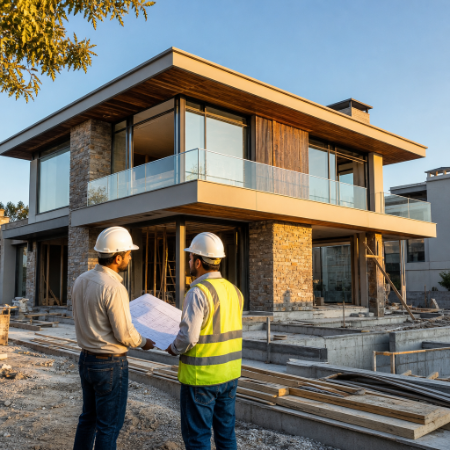
The construction industry has undergone a significant transformation over the past decade. Homeowners are no longer satisfied with structures that simply meet minimum code requirements — they want homes that perform exceptionally well in terms of energy efficiency, durability, indoor air quality, and long-term value. Achieving this level of quality demands more than good intentions. It requires a disciplined approach to planning, materials selection, site management, and the integration of modern construction technologies. Understanding what separates an average build from a truly high-performance home is the first step toward making smarter decisions throughout the construction process.
What Defines a High-Performance Home?
A high-performance home is one that consistently delivers comfort, efficiency, and resilience regardless of external conditions. These structures are designed with a systems-thinking approach, meaning every component — from the foundation to the roof — is selected and installed with the understanding that each element affects the others. Insulation, air sealing, mechanical systems, windows, and framing all work together as an integrated unit rather than as isolated parts. When this integration is done correctly, the result is a home that uses significantly less energy, maintains more consistent interior temperatures, and requires fewer repairs over its lifetime.
The Role of Air Sealing and Insulation
Among the most impactful strategies in high-performance construction is aggressive air sealing combined with proper insulation. Air leakage is one of the leading causes of energy loss in residential buildings, and it also contributes to moisture problems, drafts, and poor indoor air quality. Builders who prioritize continuous air barriers and use blower door testing to verify their work consistently produce homes that outperform those built to standard practices. Insulation choices — whether spray foam, rigid board, mineral wool, or dense-pack cellulose — must be matched to the specific climate zone and building assembly to achieve optimal results.
Site Safety and Equipment: A Foundation for Quality Work
No construction project can achieve high performance if the job site itself is poorly managed. Safety, organization, and reliable equipment are prerequisites for quality craftsmanship. One area that is increasingly recognized as critical to site efficiency and worker safety is power management. Unreliable or inadequate power sources can lead to tool failures, project delays, and hazardous conditions. Learning about how waterproof industrial power stations improve safety on construction sites reveals how modern power solutions are helping construction teams maintain consistent operations even in challenging outdoor environments. From powering precision tools to keeping lighting systems running during early morning or late evening work, dependable power infrastructure is a non-negotiable element of a well-run job site.
Organizing the Job Site for Maximum Efficiency
Beyond power management, a well-organized construction site reduces waste, minimizes errors, and keeps projects on schedule. Material staging, clear communication protocols, and regular site inspections all contribute to a smoother workflow. Experienced contractors understand that the discipline applied on the job site directly reflects in the quality of the finished structure. When workers have the tools, materials, and information they need at the right time, the probability of costly mistakes drops considerably. This level of operational excellence is what distinguishes professional construction firms from those that simply get by.
Choosing the Right Builder for a High-Performance Project
One of the most consequential decisions a homeowner or developer makes is selecting the right construction partner. Not all builders have the knowledge, experience, or commitment to deliver a genuinely high-performance home. It is worth taking the time to evaluate a contractor’s portfolio, ask about their approach to energy efficiency and building science, and understand how they handle quality control throughout the construction process. Builders who invest in ongoing education, use advanced building techniques, and maintain transparent communication with clients are far more likely to deliver a finished product that meets or exceeds expectations.
Schenkar Construction: A Commitment to Craftsmanship
Schenkar Construction has built a strong reputation for delivering construction projects that combine structural integrity with thoughtful design. With a focus on quality materials, skilled workmanship, and client-centered communication, Schenkar Construction approaches every project with the same level of dedication — whether it is a custom residential build, a renovation, or a commercial undertaking. Their team understands that a high-performance home is not an accident; it is the result of careful planning, experienced execution, and a genuine commitment to doing the work right the first time.
Advanced Strategies for Long-Term Home Performance
Beyond the construction phase, high-performance homes benefit from thoughtful design decisions that account for long-term maintenance and adaptability. Choosing durable exterior cladding, installing properly sized HVAC systems, and incorporating smart home technology for monitoring energy use are all strategies that extend the performance of a home well into the future. Passive solar design principles — such as strategic window placement and thermal mass — can reduce heating and cooling loads without adding mechanical complexity. These decisions, made early in the design process, have compounding benefits over the life of the structure.
Moisture Management and Structural Durability
Moisture is one of the most destructive forces a building faces over its lifetime. High-performance construction addresses moisture management at every level — from proper grading and drainage around the foundation to vapor control layers within the wall assembly. Builders who understand the relationship between moisture, temperature, and building materials are better equipped to design assemblies that resist rot, mold, and structural degradation. This attention to detail may not be visible once the walls are closed in, but it is precisely what determines whether a home remains sound and comfortable for decades or begins to deteriorate prematurely.
Resources and Standards Worth Following
For homeowners and builders looking to deepen their understanding of what it takes to construct a truly exceptional home, industry resources provide invaluable guidance. Detailed strategies for building a high-performance home cover everything from foundation design to mechanical system selection, offering practical insights grounded in real-world building science. Staying current with evolving best practices is essential for any builder or homeowner who wants to make informed decisions throughout the construction process.
Conclusion: Performance Is Built, Not Assumed
A high-performance home does not happen by chance. It is the product of deliberate choices made at every stage of the construction process — from site preparation and material selection to mechanical system design and final quality verification. Builders who embrace building science principles, invest in proper training, and maintain rigorous standards on the job site are the ones who consistently deliver homes that stand apart from the rest. For homeowners, the investment in a quality builder and a performance-focused construction approach pays dividends for the entire life of the structure, in the form of lower energy bills, greater comfort, fewer repairs, and lasting peace of mind.

